The „Heimanlage Berg am Laim“, the Lohhof flax roastery, the „Judensiedlung Milbertshofen“ and the “Judenhäuser” were part of a system set up by the „Aryanization Office“ located at the Gauleitung in Munich for the exclusion, discrimination and plundering of Munich’s Jews. It gave notice of termination of their apartments and assigned them a place in one of the camps or in one of Munich’s „Jewish houses“. From the end of 1938 onwards, the Jewish population was systematically expelled from their apartments or houses to get space for „Aryan“ interested parties or deserving party members. Within just one year, a large part of Munich’s Jewish population was ghettoized with the help of the camp in Milbertshofen, the „Home for Jews“ in Berg am Laim, and other communal accommodations and so-called „Jewish houses“. In Munich this program started even earlier, before the German law came into effect that deprived Jewish tenants of their Rights.
The forced accommodations served to realize the program of the „Jew-free city“. From the end of 1941, the deportations to the death camps that then began were carried out from these places.
„Home for Jews Berg am Laim” (former Convent of the religious Order of the Sisters of Mercy): a mass accommodation for Jewish people at Clemens-August-Strasse 9
The deprivation of rights of the Jewish population also included the abolition of tenant protection. Already during the pogrom of November 1938, the violation of privacy with the burglary of houses and apartments had been an essential element of the nationwide terror. The Law on Tenancies with Jews of April 30, 1939, made it possible for non-Jewish owners to get rid of their Jewish tenants without complying with the legal protection against dismissal, since „Aryans“ could not be expected to live under the same roof with Jews. As a result, the housing situation for Jewish people who were crammed into so-called „Jewish houses“ became increasingly oppressed.
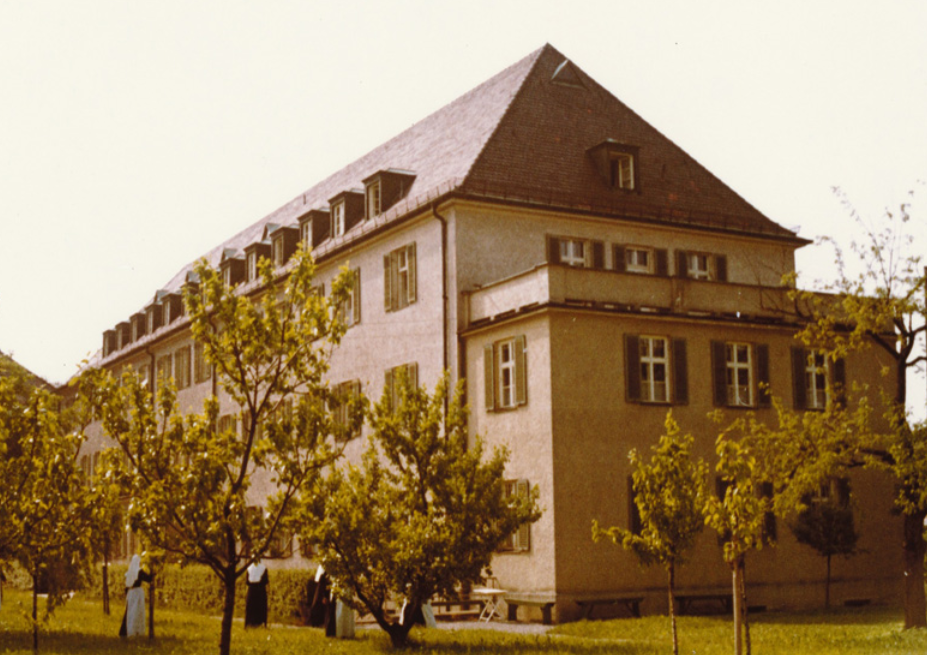
The House of the Sisters of Mercy in Bavaria, converted from 1941 to 1943 into the ‚Home for Jews Berg am Laim‘, photo from the 1960s
(Archive of the Congregation of the Sisters of Mercy of St. Vincent de Paul, Motherhouse Munich)
The „Home for Jews“ in the convent of the Sisters of Mercy, then Clemens-August-Strasse 9, today Sankt-Michael-Strasse 16, served as a mass accommodation for over 300 people who had to live on three floors in cramped conditions. Along with the „Judensiedlung Milbertshofen“ and the „Flachsröste Lohhof“, it was part of a camp system for Munich’s Jews. At the same time, their concentration in the smallest of spaces enabled the Gestapo to act quickly during the deportations.
In addition to the extraordinarily cramped living situation, the use of forced labor made people’s lives more difficult. The ‚Closed Labor Assignment‘ introduced for Jewish men in 1938 was successively extended to women and older people. Hard, dirty work that often had to be done without tools and protection, long working hours and the prohibition of using public transport to and from work tormented the people just as much as the uncertainty of their own fate in the face of the constant deportations from autumn 1941 onwards. The fear of deportation drove many to suicide. From April 1942, Else Berend-Rosenfeld had originally been the director of the facility. After her escape, Curt Mezger ran the camp until its closure. Of the deportees, only a few people survived. On March 1, 1943, the ‚Heimanlage‘ was completely shut down and the remaining residents were deported to Auschwitz. The memorial at Sankt-Michael-Strasse 16 commemorates the life and death of the residents.
Written by Edith Raim, nsdoku München
Barracks camp Knorrstrasse 148 (Jewish settlement Milbertshofen) Collection point for Munich Jews before their deportation
The barracks camp in Knorrstrasse was euphemistically called the „Jewish settlement“ by the prosecuting authorities. It was built at Knorrstrasse 148 in the Milbertshofen district od Munich in the spring of 1941 on the initiative of the so-called „Aryanization Office“ of the Gauleiter and in close coordination with the city administration and the Gestapo. It was in an industrial area in the Milbertshofen district and was the largest ghetto for Jews in Munich. Conscripted Jewish workers had to build the camp without receiving any pay for it. The Munich city administration took over the construction management. The construction was carried out by the Hinteregger company. The construction costs were payed in advance by the city and epaid by the „Aryanization Office“ within a year. For this the „Aryanization Office“ demanded a daily housing fee from the Jewish Community for each camp inmate and extorted „voluntary donations for the construction of the camp“ from individual Jewish persons. These taxes extorted from the Jews amounted to many times the actual construction costs. The barracks camp, built on an area of more than 14,000 square meters, offered space for ca 1,100 people (but was repeatedly overcrowded). No one was allowed to leave the camp without permission. The original purpose of the „Milbertshofen Jewish Settlement“, as the camp was officially called, was the ghettoization of Munich’s Jews.
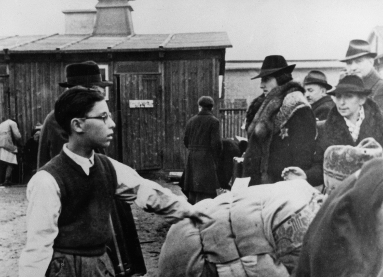
Arrival of new occupants in November 1941
From the end of 1941, the strictly enclosed barracks camp served as a collection point for the deportations that were now beginning. The first transport left Munich in November 1941 from the nearby Milbertshofen freight station. The approximately 1,000 men, women and children of that transport were murdered by the SS on November 25, 1941 in Kaunas, Lithuania. The second transport from Munich to the Piaski transit ghetto near Lublin on April 4, 1942 was also handled via the Milbertshofen camp. More than half of the 776 deportees came from the Swabian region and had been transferred to Milbertshofen a few days before the transport. In the three months from June to August 1942, the National Socialists deported a further 1,200 Jews from Munich and Swabia to the Theresienstadt concentration camp in 24 transports of 50 people each. These transports were also assembled in the barracks camp at Knorrstrasse 148. The Gestapo picked up the persons concerned in buses and furniture vans and took them to the main railway station or the freight station in Laim, where they were sent to the Theresienstadt concentration camp in a third-class passenger car attached to a regular train. Upon their arrival at the Milbertshofen barracks camp, the people destined for deportation were subjected to a body search. They had been allowed to take 50 kg of luggage with them, and an additional 50 Reichsmarks had to be paid as „travel expenses“ to the death camps. Gestapo officers, employees of the „Aryanization Office“ and the tax administration searched the luggage they had brought with them to prevent people from taking valuables, jewelry, cameras and money. Numerous items were confiscated or stolen. After the Jewish community was almost completely wiped out by emigration and deportation in August 1942, the barracks camp was dissolved. After that the Bayerische Motorenwerke (BMW) used it as accommodation for foreign forced laborers.
After 1945, refugees were housed here until the end of the 1950s. The Munich municipal housing office used in later years remains of the camp to accommodate homeless people. There are no structural remains of the camp area today. On Troppauer Straße, a sculpture in the shape of a large menorah commemorates the function of the place as a gathering and transit point for Jews as well as the fate of its inmates.
Flachsröste Lohhof
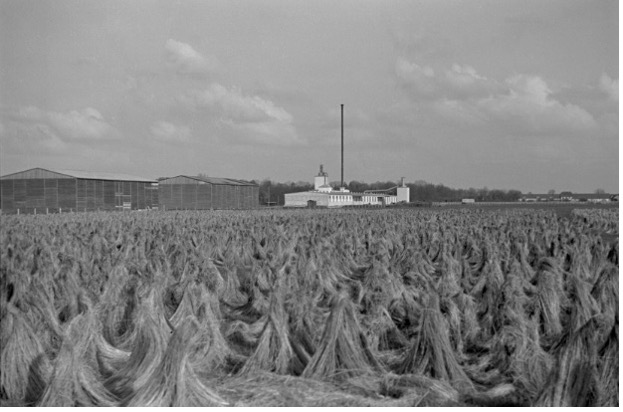
Flachsröste Lohhof 1937
Flachsröste Lohhof GmbH was established in the autumn of 1935. Here, flax was processed into natural fibres that were used to make linen. The work in the factory and in the field in the blazing sun was notorious. During the Second World War, the Lohhof flax roasting company was considered an important company for the war effort and was given preferential treatment in the allocation of workers. In 1942 alone, according to the specifications of the Reich Economic Office, at least 800 tons of finished fiber had to be produced in flax roasting. This was equivalent to processing 1,000 railway wagons loaded with flax. In Lohhof, especially women were used for forced labor. They were mainly Jewish women from Munich and a group of about 68 Polish Jewish women from the Łódź ghetto. They had to work either for very little money or for „board and lodging“. In July 1941, for example, a German Jewish woman earned only 11.70 RM a week for a 10-hour working day. A total of about 300 mainly young Jewish women were employed in Lohhof, who were under the supervision of the German foremen. The work performance was closely monitored by the „Aryanization Office“. The Lohhof flax roasting company was thus one of the biggest Munich employers that employed Jewish forced laborers. There was a camp barrack on the factory grounds in which up to 90 of the Jewish women were interned. The other Jews from Munich had to make the long journey to Lohhof every day. Although workers were considered indispensable in factories important to the war effort, 64 Jewish workers were withdrawn and deported in November 1941 and another 43 at the end of March 1942. They were initially replaced by mostly older Munich Jews who lived with a non-Jewish partner in a so-called „mixed marriage“. In October 1942, the „Jewish Work Detachment Lohhof“ was disbanded. The few remaining Jewish workers were distributed to other companies in Munich. They were replaced by so-called Eastern workers from Ukraine and forced laborers from Belgium and French prisoners of war. Today, a monument on the site commemorates the history of Nazi forced labor in the Lohhof flax roastery.
From: Gedenkbuch Münchner Juden
Judenhäuser („Jewish houses“)
In the spring of 1939, the Nazi authorities began the forced eviction of apartments in which Jewish citizens lived. As Jews, they were to live exclusively in „Jewish“ houses if possible. For these houses, the planned „Aryanization“ of real estate ownership was temporarily suspended. By the end of April 1941, only 45 of the ca 1,800 apartments in „Jewish“ ownership had been left because of this „Aryanization of housing“. The „de-Judaization“ of dwellings in Munich contributed significantly to the further exclusion, social isolation and deprivation of rights of these Munich residents. They lost their homes and often their last places of refuge and were often crammed together in the „Jewish houses“ in an inhumane manner and were easily controlled there for later deportation. In 264 apartments, mostly in houses earlier owned by Jewish owners (some of whom had already emigrated), Jews had to stay for this purpose. At the end of 1941, there were probably about two dozen „Jewish houses“ in Munich, comprising a total of over 300 apartments. Often four or five families shared an apartment. The loss of their own dwelling, which in the years before had often served as the last refuge from National Socialist persecution, meant a massive attack on the Jewish community. In August 1941, according to the Jewish Community, almost 1,500 Jews lived in „Jewish houses“. They were mainly women, often old and completely impoverished due to the National Socialist plundering – because men found it much easier to find host countries as emigrants due to their professions and greater financial strength.
Munich’s „Jewish houses“ were, for example, Franz-Joseph-Strasse 15, Galeriestrasse 30, Goethestrasse 23 and 66, Jakob-Klar-Strasse 7, Kaiser-Ludwig-Platz 1, Leopoldstrasse 42 and 52(a), Maria-Theresia-Strasse 23, Thierschstrasse 7, Triftstrasse 9, Frundsbergstrasse 8, Möhlstrasse 30, Richard-Wagner-Strasse 11, Bürkleinstrasse 16 (today 20) as well as Widenmayerstrasse 39 and 41. Jews who had been expelled from their homes were also sent to the apartments of Jewish tenants in houses owned by non-Jews. However, when the tenants were thrown out or deported, the subtenants had to leave as well. This practice was evident, for example, in Bauerstrasse 22, Widenmayerstrasse 36 and Martiusstrasse 8.
Another option for evicted Jews to find accommodation in the short to medium term were boarding houses, some of which apparently specialized in accommodating Jewish citizens.
The approximately 20 „Jewish houses“ in Munich had been an essential element of the forced expropriation of German Jewish families since 1939. In most cases they had to move there before the deportation to the concentration camps. The length of stay in the „Jewish houses“ was usually short, as the people were then taken to assembly camps before their final deportation. The „Aryanization“ dwellings since 1938/39 and the deportations from 1941 led to a „redundancy“ of about 3000 apartments in Munich. Many were taken by party members and their families. The SS Untersturmführer Kurt Stirnweis e.g. moved into the apartment of Charlotte Perutz at Martiusstrasse 8.
Wikipedia, Edith Raim, Anton Steiner, Holger Schelpmeier
Krankenheim Israelitische Privatklinik (Israelite Nursing Home and Privat Clinic) Hermann-Schmidt-Strasse 5-7 1911-1942
Charity as well as care for the sick have always been among the most important basic principles and areas of responsibility of Jewish communities. In 1906, the association „Krankenheim Israelitische Privatklinik e.V.“ was founded on the initiative of the lodge B’nai B’rith and the two doctors August Feuchtwanger and Joseph Marschütz. The association bought the building at Hermann-Schmid-Straße 5 in 1910 and opened a hospital in 1911. The hospital was available to people of all denominations. Until 1933, only half of the patients were Jews. During the First World War, injured front-line soldiers were also given medical care there. In 1919, the building was expanded to include the neighboring building at Hermann-Schmid-Straße 7, and from 1925 a maternity ward was added, until the hospital had 40 beds at the beginning of the 1930s. The private clinic also included a nurses‘ home, which had existed since 1900 and was located in the „Lipschütz’sche Versorgungsanstalt“ in Mathildenstraße until it found new accommodation on the first floor of the Israelitische Privatklinik e.V. in 1911.
Even before the „Nuremberg Laws“ were passed in 1935, the racist ideas of the National Socialists about the „German nation “ and the primacy of „German blood“ had caused brutal cuts in the health care of the Jewish population, which finally led to Jews no longer being cared for in public hospitals in 1936. Refuge and medical care for Jewish people were only offered by the Israelite Hospital in Munich and two other hospitals in Fürth and Würzburg. On the orders of Heinrich Himmler, the home was dissolved in May 1942, and patients, nursing staff and doctors were deported to the Theresienstadt ghetto and concentration camp from June 1942. Among the deported doctors was the head of the Israelite Private Clinic, Julius Spanier. Subsequently, the Nazi organization ‚Lebensborn e.V.‘ appropriated the building without paying the agreed purchase price. The building was destroyed during the war.
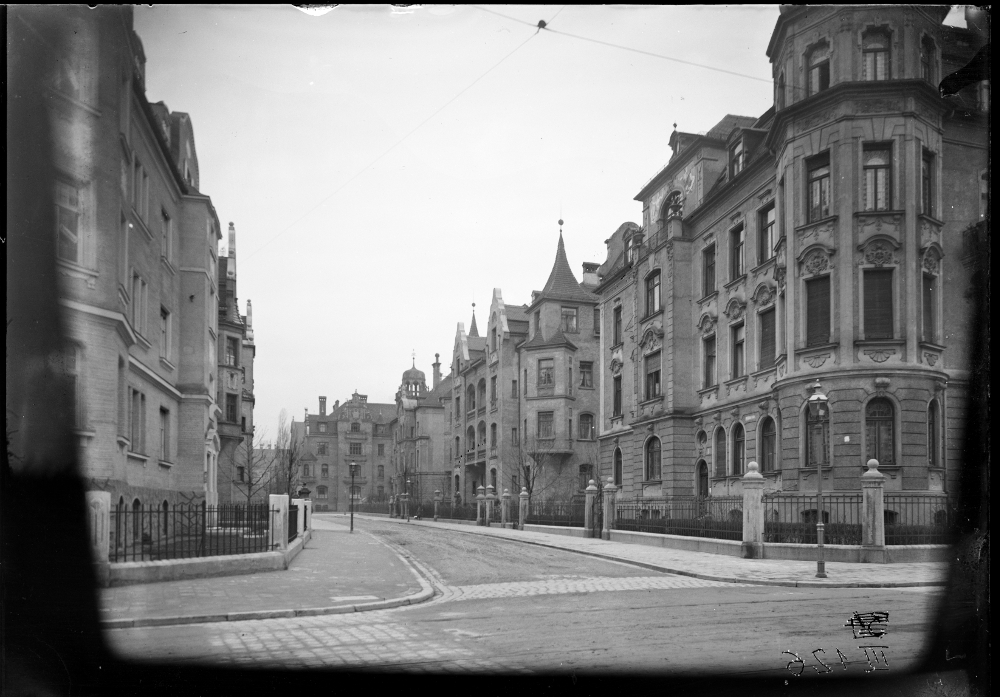
View from Kobellstrasse into Hermann-Schmid-Straße, in the back: Israelische Privatklinik, 1910
StadtAM, HB-II-c-0511
Written by Edith Raim
Jewish hospital after 1945
During the Nazi era, Jewish medical infrastructure was; most hospitals were destroyed or repurposed, and only a fraction of Jewish physicians survived the war.Immediately after WWII, as Jewish survivors avoided German doctors, Jewish self-governing bodies established a medical infrastructure. In the spring of 1946, a hospital for the persecuted was opened at the Max-Josef-Stift Gymnasium in Bogenhausen, Munich, under the management of UNRRA (United Nations Relief and Rehabilitation Administration). By April 1949, under Dr. Moses Osterweil, the hospital dedicated itself entirely to caring for surviving Jews. The institution remained active until autumn 1951, providing vital assistance during the initial phase of postwar recovery.
Old people´s homes in München – Residential facilities for old Jewish citizens in need of care in Munich
From the beginning of the 19th century, numerous Jewish welfare organizations took over the care of the old, poor and sick long before the welfare state was established. During the pogrom of 1938, old people’s homes or sanatoriums were preferred targets of the National Socialists. The brutal expulsion and abandonment of the elderly and often helpless people represents a special level of inhumanity. Although the Munich Israelite retirement home could be used again at the end of 1938, the plight of the people was reflected in the overcrowding: old people were often neither physically nor financially able to consider emigrating and were helplessly at the mercy of the harassment and arbitrariness of the National Socialists.
Written by Edith Raim
Lipschütz’sche Versorgungsanstalt, Retirement home, Mathildenstrasse 8/9
Little is known about the Israelite retirement home at Mathildenstrasse 8/9, whose origin is probably a foundation of wealthy Jewish citizens. Since the end of the 19th century, the „Lipschütz’sche Versorgungsanstalt für alte Erwerbsfähig Israeliten“ in Mathildenstrasse was responsible for the old people’s home. In 1937, an additional floor was added to the facility. At that time, the monthly pension price was 90 Reichsmarks.
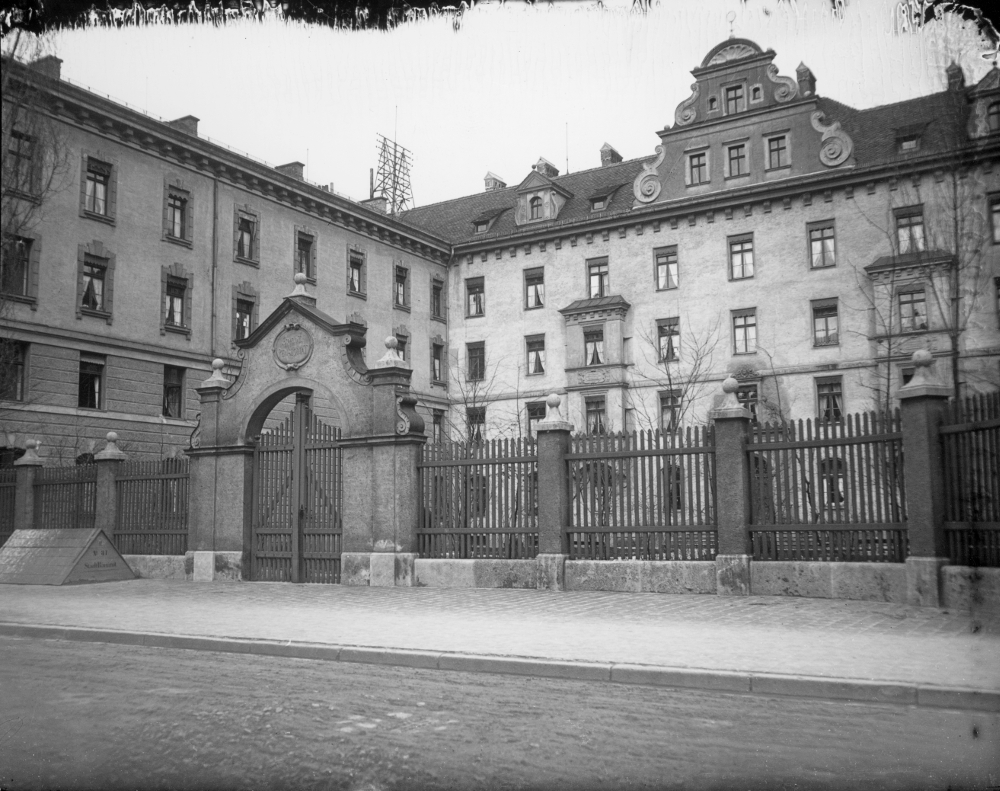
Mathildenstift, Israelite Retirement Home, 1910
StadtAM, Pett2-1847
During the „Reichskristallnacht“ on November 10, 1938, the house was forcibly evicted. Many residents were put on the street and had to seek shelter with relatives or acquaintances. It took days for the welfare office of the Jewish Community to determine the whereabouts of all the residents. After tough negotiations, the Jewish community succeeded in reopening the house at the beginning of December 1938. However, the old people, who had previously lived in one room each, now had to share a room in twos or threes. In February 1942, about 100 residents lived tightly packed in the home. In March and April 1942, the remaining residents were transferred to the „Judensiedlung Milbertshofen“, to the „Heimanlage für Juden“ at Berg am Laim, to the retirement home on Klenzestrasse or to the „Israelitische Privatklinik“. Shortly after that most of them were deported to Theresienstadt. The „Reich Association of Jews in Germany“ was instructed to sell the building. There were several prospective buyers. The neighboring German Labor Front (DAF) wanted to expand its rooms to the property. The city of Munich also had a strong interest in the building, as there was already a municipal boarding school in the immediate vicinity, which could have been expanded without significant effort by purchasing the „Lipschütz’sche Versorgungsanstalt“. The SS was finally able to secure the bid, which acquired the property including its inventory on 24 March 1942 for the price of 127,500 RM for the Nazi organisation „Lebensborn e.V.“. However, the money never arrived at the „Reich Association of Jews in Germany“.
Altenheim (retirement home) and rituelle Speiseanstalt (ritual dining facility) Klenzestrasse 4
The ritual dining facility at Klenzestrasse 4 was founded in 1906 by the married couple Gabriel and Rosa Ritter. In 1917, the ground floor of the four-storey residential building was rebuilt. Three dining rooms, a kitchen and a pantry were built. From this point on, the welfare responsibles of the Jewish Community took over the restaurant. The Jewish Community then probably acquired the building in the late 1920s. Between 33,000 and 56,000 meals were served there per year. At times, a warming room for unemployed adults and a sewing room were also set up here.
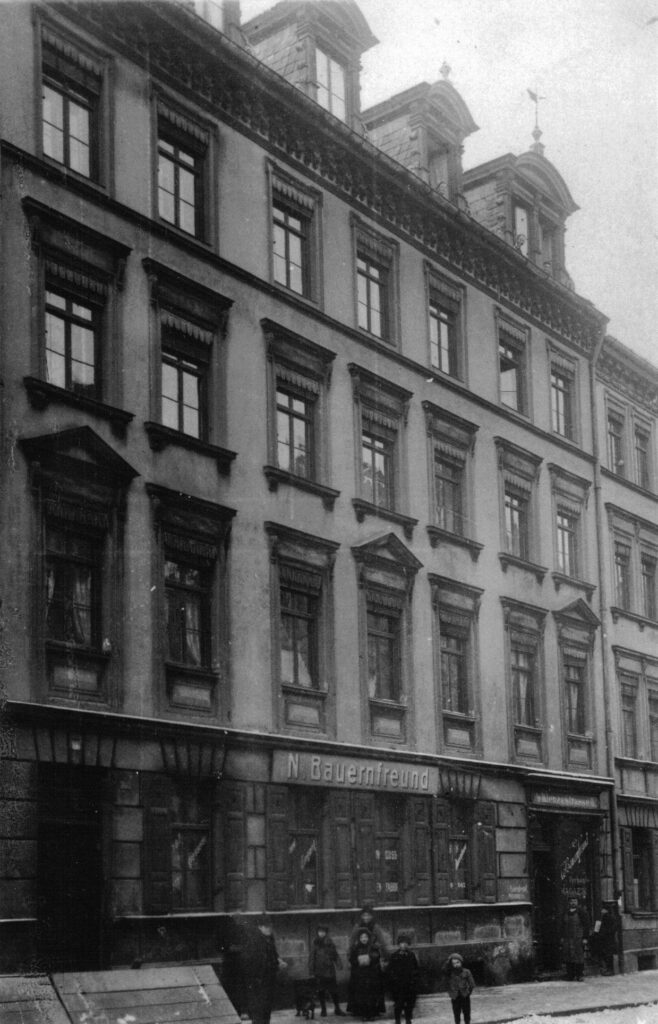
Altenheim und rituelle Speiseanstalt, Klenzestraße 4, um 1908
(Stadtarchiv München)
In 1934, the old people’s home was opened at Klenzestrasse 4, run by Jakob Feibusch in a strictly ritualistic manner. The residents were accommodated in 2- and 3-bed rooms. In 1942, the home comprised three floors and the converted attic. On each floor there were six rooms, a chamber and a bathroom. In February 1942, 54 people lived in the home. Most of them were transferred to the „Judensiedlung Milbertshofen“ at Knorrstrasse 148 in mid-March 1942. On July 10, 1942, the home was completely evacuated, and the last residents were admitted to the „Home for Jews“ in Berg am Laim. The city of Munich had already confiscated the house on June 24, 1942 to set up an auxiliary hospital here. However, all ongoing facility costs had to payed by the „Reich Association of Jews in Germany“ as the owner. At the end of November 1943, the city set up a women’s home in the building. The house was badly damaged in an air raid in March 1944. In 1953, the city returned the Klenzestrasse 4 plot to the Jewish Restitution Successor Organisation (IRSO) as part of reparations. The house had been demolished after the end of the war due to severe damage.
From: Gedenkbuch München
Retirement Home, Israelite Pensioner´s Home, Kaulbachstrasse 65
The Israelite pensioner´s home at Kaulbachstrasse 65 was founded in 1905. The construction of this „home for old people who are not entirely without means“ was made possible and financed by considerable donations from well-known Jewish patrons, among them Baroness Klara von Hirsch-Gereuth (Paris), Josef Kronheimer (Melbourne), the councillors of commerce Berolzheimer and Bernheimer, Albert Landauer, as well as Hermann and Oskar Tietz. The pensioner´s home originally had 15 rooms, but was expanded in 1910 by an additional wing with 17 rooms, a hall and other utility rooms. During the „Reichskristallnacht“ in November 1938, the home was temporarily closed. The local group of the SA held a feast in the building, stole furnishings and money and forced the leader, Regina Tuchmann, to sign a bank power of attorney for several thousand marks under extortionate pressure. The old people had to be provisionally accommodated in private apartments. The boarding school could not be reopened until 1 April 1939. During the eviction and ghettoization of the Jews, the Jewish Community was forced to send more and more people to the old people’s homes. In February 1942, the home was very densely occupied with about 100 residents. A month later, the Jewish Community had to vacate the building for the Nazi organization „Lebensborn e.V.“, which set up a „mother residence“ there. The residents were transferred to the old people’s homes at Klenzestrasse 4 and Mathildenstrasse 9, to the „Heimanlage für Juden“ in Berg am Laim and to the „Judensiedlung“ Milbertshofen. On July 15, 1945, survivors of the Shoah refounded the Jewish Community of Munich in the building at Kaulbachstrasse 65. This was also the first contact for the surviving Munich Jews, returning from Theresienstadt. On February 13, 1970, seven people were killed in an arson attack on the Jewish retirement home. Today, the building is once again used as a retirement home on behalf of the Jewish Community.
From: Gedenkbuch Münchner Juden